Home / Procedures / Advanced Devices
Advanced Rhythm Devices
Reviewed by Dr. Ajay Kaul, M.Ch — Chairman, Cardiac Sciences, Fortis Noida · Updated August 2026
The 60-second summary
What it is
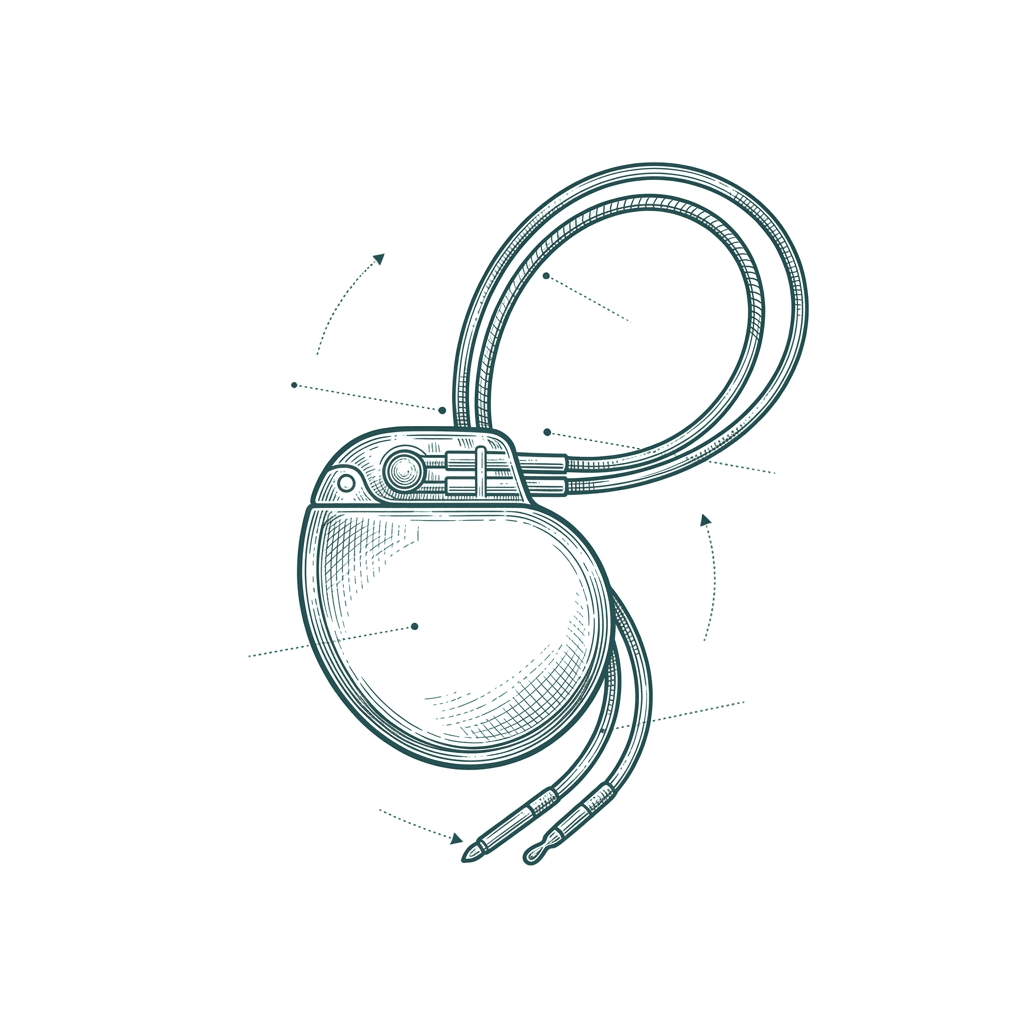
Advanced cardiac device therapy for heart failure and complex rhythm problems — most commonly CRT (cardiac resynchronisation therapy), which paces both lower chambers of the heart together to help a weakened heart pump more efficiently.
Who needs it
Patients with heart failure and a specific pattern of delayed electrical conduction between the heart's chambers, seen on ECG, where standard medication alone hasn't fully controlled symptoms.
Hospital stay
Usually 1–3 days.
Back to normal
Most people resume light activity within a few days; the full benefit on heart function often develops gradually over 3–6 months as the heart responds to resynchronised pacing.
Are you a candidate for CRT?
- Heart failure with reduced heart function (ejection fraction) confirmed on echocardiogram
- A specific delayed conduction pattern, often left bundle branch block, seen on ECG
- Symptoms persisting despite optimal heart failure medication
- Sometimes combined with defibrillator function (CRT-D) for patients also at risk of dangerous rhythms
CRT doesn't benefit every heart failure patient.
CRT specifically benefits patients whose ECG shows the particular conduction delay pattern it's designed to correct — it isn't a general heart failure treatment for everyone with a weak heart. Testing determines genuine candidacy before it's offered.
How CRT and device therapy works
1 · Three leads, not two
Standard pacemakers use one or two leads; CRT adds a third lead positioned to pace the heart's left side, coordinating both lower chambers to beat together.
2 · Matched to what your ECG actually shows
Candidacy is confirmed by the specific electrical pattern on your ECG — this determines whether CRT will genuinely help your heart's pumping efficiency.
3 · Complex cases, including device revisions
Beyond first-time CRT implantation, this covers device upgrades, lead repositioning, and revision procedures for patients whose prior device needs adjustment.
“CRT and advanced device therapy: helping a weakened heart beat in sync” — video launching soon on our YouTube channel
Recovery, week by week
The risks, honestly
Advanced device implantation carries the general risks of any device procedure — infection, lead displacement, bleeding — plus a technically more demanding lead placement for the additional left-heart lead, which occasionally cannot be positioned ideally due to individual vein anatomy. Dr. Kaul will discuss your specific candidacy and risk profile based on your ECG and vein anatomy before the procedure.
What CRT and advanced device therapy costs
Every case is priced individually
Delhi NCR private hospitals (indicative) — CRT devices, particularly combined CRT-D devices, cost significantly more than standard pacemakers, reflecting the additional lead and device complexity.
Common questions
A regular pacemaker corrects a slow heart rhythm. CRT specifically coordinates the heart's two lower chambers to beat together, improving pumping efficiency in certain heart failure patients — a different problem entirely.
Diagnosed with blockages? Talk before you decide.
A conversation costs nothing — and it may change the plan.