Home / Procedures / Pediatric Surgery
Pediatric & Congenital Heart Surgery
Reviewed by Dr. Ajay Kaul, M.Ch — Chairman, Cardiac Sciences, Fortis Noida · Updated August 2026
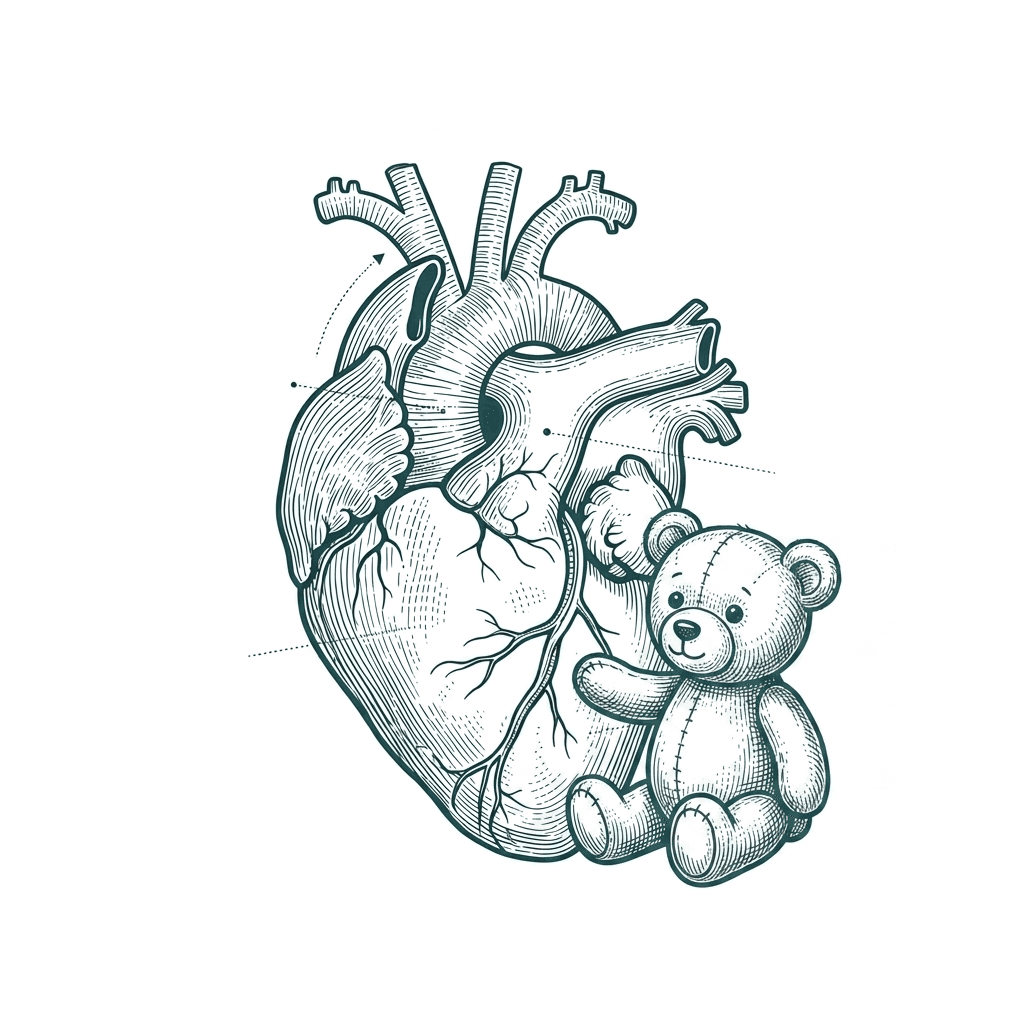
The 60-second summary
What it is
Surgery to repair a heart defect a child is born with — most commonly a hole between heart chambers (VSD or ASD) — restoring normal blood flow so the heart and lungs can develop and function normally.
Who needs it
Children diagnosed with a congenital heart defect large enough, or positioned in a way, that it affects growth, breathing, or heart function.
Hospital stay
Usually 5–8 days, depending on the defect and the child's age.
Back to normal
Most children return to normal play and school within 4–6 weeks; growth typically catches up fully within months.
Does your child need heart surgery?
- A moderate-to-large hole between heart chambers (VSD or ASD) confirmed on echocardiogram
- Signs of strain on growth — poor weight gain, frequent respiratory infections, breathlessness during feeding or play
- Signs the heart or lungs are being affected by excess blood flow through the defect
- A defect unlikely to close on its own, based on size and location
- More complex congenital anomalies requiring specialised repair
Not every heart defect needs an operation.
Many small heart defects close on their own as a child grows, and are simply watched with regular echocardiograms rather than operated on. Dr. Kaul will tell parents honestly whether watching, medication, or surgery is the right path — surgery only when it is clearly needed.
How Dr. Kaul approaches your child's surgery
1 · Repair, not just closure
Each defect is repaired to restore normal heart architecture, not merely patched — matched to the child's specific anatomy on echocardiogram.
2 · Timing chosen around the child
Surgery is planned for the point that best balances letting a child grow as long as safely possible against the risks of delaying repair too long — never rushed, never delayed past what's safe.
3 · Family included at every step
Parents are walked through what the defect is, what the operation involves, and what recovery looks like in plain language, with time for every question.
“Congenital heart defects: what parents need to know before surgery” — video launching soon on our YouTube channel
Recovery, week by week
The risks, honestly
Congenital heart surgery carries the general risks of any heart operation — bleeding, infection, irregular rhythm — plus considerations specific to a child's smaller size and the defect being repaired. In experienced pediatric cardiac centres, outcomes for straightforward defect closures are generally very good, though your child's specific risk depends on the defect's complexity and overall health. Dr. Kaul will give you a risk assessment specific to your child, not a general statistic.
What pediatric heart surgery costs
Every case is priced individually
Delhi NCR private hospitals (indicative) — depends on the specific defect, complexity of repair, and length of ICU stay required.
Common questions
Many small defects do, especially in infants — which is why many are watched rather than operated on immediately. Your child's specific defect, size, and trend over repeat echocardiograms determine the right approach.
Diagnosed with blockages? Talk before you decide.
A conversation costs nothing — and it may change the plan.